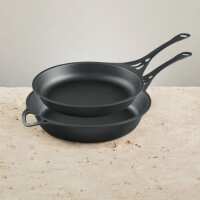
“Awesome piece of gear, well made and seasoned, non stick is excellent if you look after it. What is not good is the delay in delivery, 2 months from the original ETA. Do what you say you’re going to or you’ll lose customers, any business understands NPV.”
“We use these everyday, they would be the best frypan I have ever used by far. Easy to use, easy to clean, they just keep getting better. I love that they are Australian made and supporting an Australian company.”
Hi Maria,
We’re sorry to hear you’re feeling disappointed, that’s certainly not the experience we want anyone to have.
From your review, we don’t have enough information to understand what issue you’re experiencing. Please let us know what seems to be the problem with your pans so we can better assist.
Feel free to reach out to our customer care team at info@solidteknics.com with further details (and include some photos), and we’ll be more than happy to assist you.
Kind regards,
The Solidteknics Team
“Deeply disappointed with this product. The seasoning won’t stay on no matter what I cook, and it ends up ruining the food. I own other cast iron pans and have never had this issue with them.”
Hi Christine,
When seasoning hasn’t bonded properly, it can flake or create small black specks. This can feel like the pan is “ruining” food, but it’s harmless — it’s not a coating coming off, just excess seasoning — and it’s very easy to fix.
Flaking or peeling seasoning is simply a sign of a weak seasoning foundation, which can happen for a few reasons, including:
- Too much oil used during seasoning.
- Oven seasoning not baked long enough (needs 1.5–2 hours at 250°C)
- Not cooling between layers
- Cooking acidic or very wet foods early on.
- Carbon build-up creating bumps.
- Detergents or heavy scrubbing removing young seasoning.
The good news: seasoned wrought iron is forever renewable, and this is a simple fix.
Here’s how to stop flakes/specks appearing in your food:
1. Smooth the affected areas.
Give the pan a good scrub with a brush or scourer (no need to strip the whole pan — just the flaky or lumpy spots). The surface should feel smooth to the touch.
2. Rebuild the seasoning.
Continue cooking with fats and oils to naturally rebuild your seasoning layer, or use our stovetop seasoning method for a quicker reset. (This creates a strong, stable foundation so the seasoning bonds properly instead of lifting).
If you’d like to send through a couple of photos, we’re more than happy to take a look and guide you step-by-step.
Warm regards,
The Solidteknics Team