How would you rate the overall quality of the product?
Very Low
Okay
Very Good
How would you rate the value of the product for the money?
Very Low
Okay
Very Good
How difficult or easy is the product to assemble, use, or operate?
Very Difficult
Average
Very Easy
How well does the product perform / function?
Very Weak
Okay
Very Good
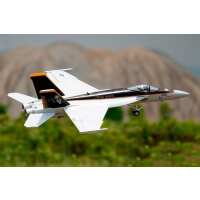
“As I inspected all of the components in the box, everything seemed to be of good quality. Assembly was very easy and all parts fitted together very well. After I had everything assembled it looked good on the bench. I took this plan to the field for the first flight and I went through all of my maiden flight checkout before take off. Naturally, I do this before a new plan leaves my bench, and I reinspect all controls and insure that my radio is properly programed for a smooth maiden flight. I then advanced the throttle and allowed it to climb naturally on its own. Everything was good until I put it into a shallow right bank turn. It seemed as though it wanted to descent more and more as I got into the turn. When I corrected it for straight level flight it wanted to climb. I brought the plan down and made a not so smooth landing but without any damage. After even more closer inspection the right elevator came loose from pivoting rod. The design and assembly required to put in a small screw to hold the elevator in place, but the rod apparently failed when a small piece broke off from the end of the rod. I made a home repair to the rod and reattached the elevator. Three days later I flew it again several times without any further problems. It flew great and handles very well. This plane is NOT for beginners. EDF flying experience is required to handle this plane. In all I love flying this and the speed is awesome. Then again I am a speed nut..”
“The only comment I have to say is that its a shame that it seems that the only users that get any re-posts or any attention on the Motion RC Facebook site seem to be the ones that heavily modify or customize their new purchases with a different paint job or livery. People that post their new model on the Facebook site with the stock livery, just seem to never get any notice. I had posted a few times on the Motion RC website of my purchases and even a few flight videos showing how well the plane flies, thinking this may be something that Motion RC would be interested in.. to see and take pride knowing that the products they're selling out of the box when set up correctly flies very well. I guess that is not the case.”
How would you rate the overall quality of the product?
Very Low
Okay
Very Good
How would you rate the value of the product for the money?
Very Low
Okay
Very Good
How difficult or easy is the product to assemble, use, or operate?
Very Difficult
Average
Very Easy
How well does the product perform / function?
Very Weak
Okay
Very Good
“I'm primarily a balsa/glow flyer, but the EDF bug hit me and I bought this as my 1st EDF. In hindsight the F-22 4S would have made a better 1st choice (I now own both), but this is the one I give the edge to. For background's sake I fly at a grass field, so the little gear on these 64mm birds won't cut it for take off/landings. Hand launch and belly land, gear removed. The F-22 is easier to hand launch, despite it's (slightly) wider fuse. It's lower in weight and I think all that fuse and wide wing lend to a forgiving "float" at hand launch. For those reasons, and it's greater stability in air (assuming low rates), it would be my choice for a 1st EDF. That said, the F-18 may be slightly harder to launch, but it's noticeably faster, and just flies so... scale? Forgive my lack of a more proper explanation, but at the manual recommended rates (and generous expo for my clumsy thumbs) it just feels bigger, crisper, faster and more fun than the F-22 with the same power system. Great vertical for the money, and rolling it over and pulling into a dive to cross the field wide open plasters a smile across my face every time. Like the F-22 it glides well for landing approaches, and need a bit of throttle to keep the nose down until your truly ready to set it on the ground. It's a method quickly picked up, and nothing to be afraid of. I'm using the admiral 4S 2200 bats, spec CG, bat shoved all the forward. Recommended rates, and I'd suggest some forum research to get the initial elevator neutral setting, as they like (in my case) a couple mm of up elevator for neutral. Amazing value for 120 bucks PNP. Buy it.”
How would you rate the overall quality of the product?
Very Low
Okay
Very Good
How would you rate the value of the product for the money?
Very Low
Okay
Very Good
How difficult or easy is the product to assemble, use, or operate?
Very Difficult
Average
Very Easy
How well does the product perform / function?
Very Weak
Okay
Very Good
“I want to preface this by saying that this is the fourth airplane and third freewing jet I have ordered from Motion RC and the others have been amazing and of far better quality than those from any other company. Also based on the other reviews, this is a good airplane, so I probably got a dud. So, some background on me. I have been flying rc since I was ten and have significant experience with a variety of edf jets. I regularly fly aircraft capable of exceeding 90 miles per hour in the park where I fly without issue of any type. And I scratch build airplanes so am used to achieving proper cg and aligning control surfaces.Now this is the worst out of the box experience I have ever had (although a few things I have built myself have flown worse). I assembled the airplane exactly according to the directions with the exception that I used five minute epoxy instead of the provided glue. From the get go I noted a few weird things. The foam pieces were all slightly misaligned like the person who glued them was confused. The cheater inlet is huge even though the intakes look like they should provide plenty of air for the fan, so it seems like it adds drag without much of a boost in static thrust. Unlike other freewing aircraft it seems like the designers randomly picked screws out of a bag so there are 4 different varieties of screw. And where the F-22 had screw-on vertical stabs these had to be glued on, which surprised me, but wasn't an issue. Still, it went together well, like any freewing aircraft. I checked to make sure the control surfaces were moving in the correct direction and set the throws to those recommended by the factory. Finally I did a taxi test.The real problems started when I got to the field. I started by setting the CG to 70mm, as specified by the manual. I did a control surfaces check and a range check, then taxied without issue before takeoff. I started the takeoff run, and to my surprise the airplane rotated and took off by itself. Unfortunately it was very tail heavy so I turned around and performed a safe landing down wind. I reset the cg to 60mm, the forwards end of the factory cg, and it was much better. I was able to rotate and takeoff without any problems and circled a few times to get used to the plane then lined up for a high speed pass. It felt under-powered and heavy. As it got faster it got much more sensitive on roll, but not problematically so, but when I attempted to pull up and around I had no pitch control. I dipped a wingtip to check if I had roll control, which I did, so I immediately backed off the throttle since it had been flying fine when slower and I guessed that the stabilators weren't working properly due to the slop in the stabilators being exacerbated by high speed, but I clipped a tree. Despite this it was surprisingly unharmed, which is a testament to the high quality of freewing foam. I set the rates higher and took off again with a new battery and had a similar experience. It flew well at lower speeds but when I went faster it lost all pitch control. I had even less control this time and the airplane plowed into the ground, despite my having cut the throttle and giving full up elevator and it having plenty of airspeed. The repairs were easy and the damage, despite looking bad actually was fairly minor. When I went to fly it again I removed the landing gear as unnecessary weight and added small pieces of balsa to protect the servos on landing. I glued pieces of carbon fiber to the control rods to stiffen them hoping to eliminate any slop and gain more control. The airplane climbed out well from a hand launch and felt a bit better, but was still not as agile as I would have expected from a hornet and still felt far heavier than even a much larger jet. I was able to achieve a level high speed pass without problem and climbed out fine at that point, but when I unloaded the frame in a shallow dive to get a bit more speed for a large loop later on, thinking the problem was solved. The plane stopped responding in pitch and crashed, much harder this time since it had more speed. The entire front was destroyed. I think I may have identified the problem finally. The sticks on which you put the horizontal stabs are flexible as are the servo arms. I don't know if this is new or unique to my airplane, but it is a big problem. I checked my freewing F-22 and those sticks and arms are solid, probably they'd break before flexing. It meant that at higher speeds the stabilizer didn't deflect right on the F-18.So I would be very hesitant before buying this airplane. I may have just been the victim of improperly set plastic, but this was horrible. I haven't had a crash that bad for years, and it was horrible. I'll probably rebuild this and repaint it for slow flight since the airframe can still be saved.”
How would you rate the overall quality of the product?
Very Low
Okay
Very Good
How would you rate the value of the product for the money?
Very Low
Okay
Very Good
How difficult or easy is the product to assemble, use, or operate?
Very Difficult
Average
Very Easy
How well does the product perform / function?
Very Weak
Okay
Very Good
“I just purchased this and it went together in less than an hour, not counting glue drying time. I bought the PNP version and didn't even need the instruction sheet, its that simple. Even easier than the Freewing Stinger 64mm. Can't wait to get it in the air. Using the 2200mah battery as advised. Highly recommend Freewing Jets, I have 3 now and they are all amazing.”